Let's Connect
Contact us
Thank you for reaching out, we will be in touch shortly!
Oops! Something went wrong while submitting the form.


To help provide clarity to developers, investors, and policymakers navigating PJM’s rapidly evolving capacity market, Advanced Energy United, an industry association representing companies across the power sector, engaged Ascend Analytics to conduct an independent analysis of Effective Load Carrying Capability (ELCC) outcomes in the PJM energy market. Project goals included the following:
During much of the past two decades, PJM experienced oversupply conditions, declining load, and low rates for electricity consumers. However, significant recent changes to market dynamics – including increased electrification, massive projections of data center-driven load growth, the prospect of thermal retirements, and skyrocketing capacity prices – have triggered serious concerns among key PJM stakeholders about resource adequacy, affordability, and the ability to incentivize much-needed new entry.
One of the most significant reforms undertaken in response to these dynamics has involved the methodology PJM uses to calculate Effective Load Carrying Capability (ELCC), which is used to estimate the reliability contribution of different energy generation assets, and which also acts as the capacity accreditation for generation resources. In 2023, PJM shifted from using average ELCC values to marginal ELCC values, in which the accredited capacity of a resource reflects the reliability value of the next incremental unit added to the system rather than the average value across all resources of that type.
This change has significant implications for project developers and investors. As additional renewable and storage resources enter the system, their incremental reliability value – and therefore their capacity market revenue potential – can decline. Because capacity payments are a key component of project economics in PJM, even modest changes to ELCC values can materially affect investment decisions. For energy market stakeholders who want to evaluate future capacity revenues using independent modeling approaches, it is vital to understand how closely those models align with PJM ELCC calculations.
Understanding the impacts of a shift to marginal ELCC accreditation is also important for other key PJM stakeholders, especially those who are charged with designing a capacity market that properly incentivizes the development of new generation in a way that is economically feasible.
To conduct the analysis of PJM's ELCC modeling framework, Ascend leveraged PowerSIMM™, a proprietary software suite used by power market stakeholders to model energy system reliability, resource adequacy, and ELCC outcomes under a wide range of conditions. Using PowerSIMM, Ascend created a model of the PJM system that could estimate the reliability contribution of multiple resource classes, including wind, solar, storage, demand response, and thermal generation.
As a first step, Ascend sought to replicate PJM’s baseline ELCC calculations for the 2026–2027 Base Residual Auction (BRA). This analysis used a resource adequacy model to simulate how the power system performs across thousands of possible future scenarios.
Ascend incorporated key features of PJM’s methodology into this analysis, though there were differences in the modeling approaches. For example, PJM simulations resample historical weather data directly, simulating future conditions within the constraints of past maximum and minimum temperature values. However, PowerSIMM creates new simulations of future weather that are consistent with historical trends but which are not bound by past constraints. This approach allows Ascend to explore a broader range of possible future conditions while maintaining realistic correlations between weather and electricity demand.
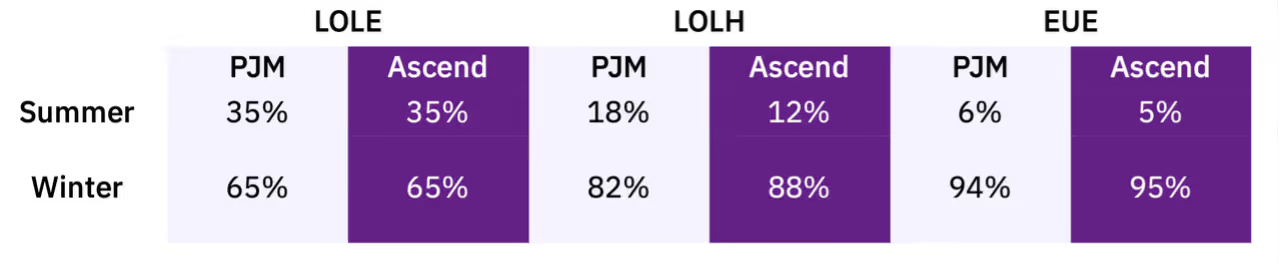
Ultimately, Ascend’s model produced results that broadly aligned with PJM’s official calculations. As seen in Figure 1, comparisons of core reliability metrics – including Loss of Load Expectation (LOLE), which measures the probability that electricity demand will exceed available supply, Loss of Load Hours (LOLH), and Expected Unserved Energy (EUE) – showed strong alignment between the two frameworks, confirming that PowerSIMM could accurately replicate PJM’s reliability dynamics.
After validating the baseline model, Ascend modeled ELCC values for major resource classes in 2026–2027. The results largely matched PJM’s published values for most technologies, with Ascend's modeling showing lower ELCC values for wind and higher ELCC for demand response.
Ascend also explored seasonal variations in reliability contributions. Because system risk has increasingly shifted toward winter conditions, wind resources – which tend to produce more electricity during winter months – demonstrate higher annual ELCC values than solar resources, despite solar’s strong performance during summer peak demand periods. This seasonal analysis highlighted an important dynamic in PJM, in which wind and solar resources can provide complementary reliability benefits across seasons.
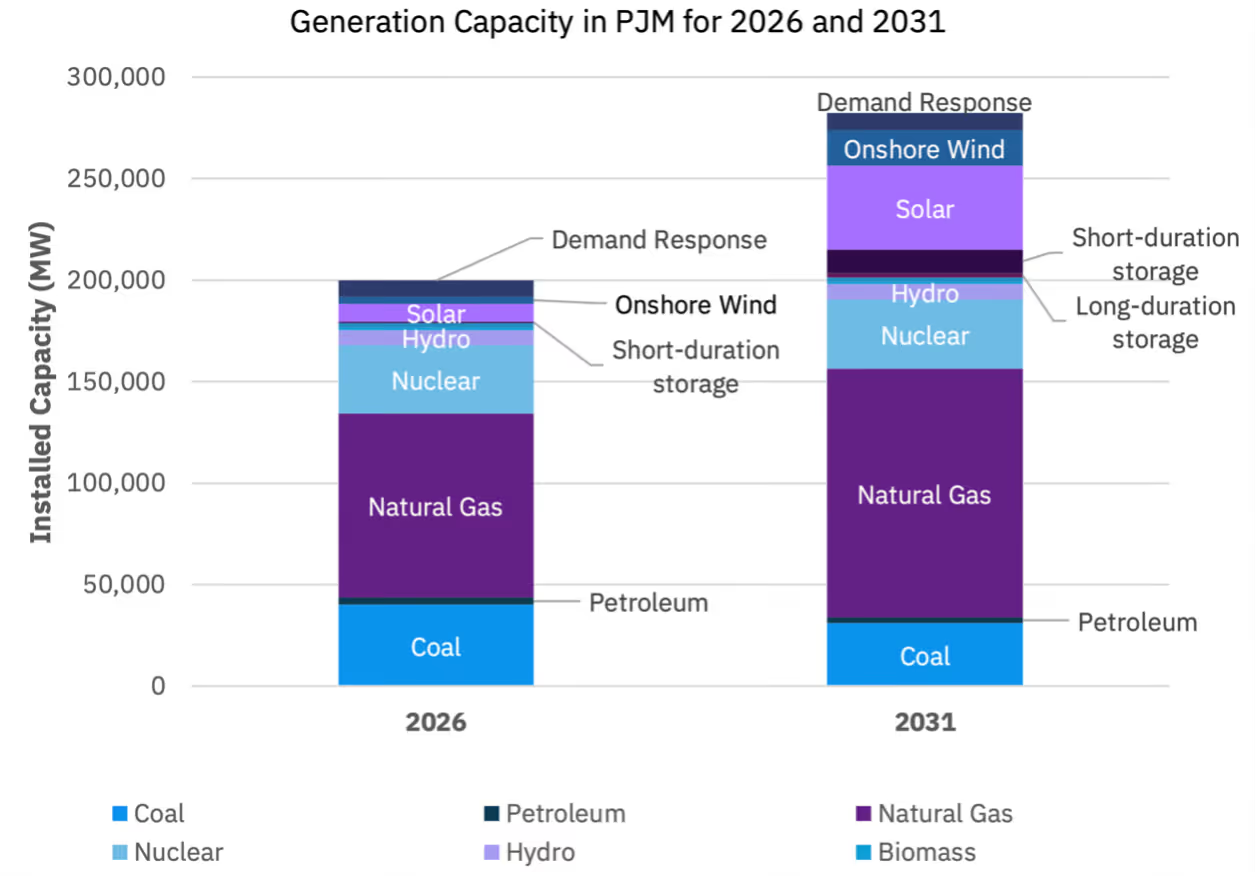
With a validated model in place, Ascend then examined how ELCC values may change through 2031 as PJM’s supply profile continues to evolve. Using data published by PJM, Ascend created a similar generation mix that accounted for the supply mix used in the 26/27 BRA, and that incorporated projected growth across several asset classes, as seen in Figure 2. For the 2031 supply mix, both solar and wind increase by a factor of around five, and storage increases by a factor of 14. On the thermal side, gas increases by 30% while coal capacity declines by 25%.
Using these projections, Ascend simulated the PJM system under multiple scenarios to evaluate how changes in the generation portfolio would affect reliability dynamics and capacity accreditation.
One of the most significant findings from Ascend's analysis was that ELCC values for several technologies are likely to decline over the next five years, as seen in Figure 3.
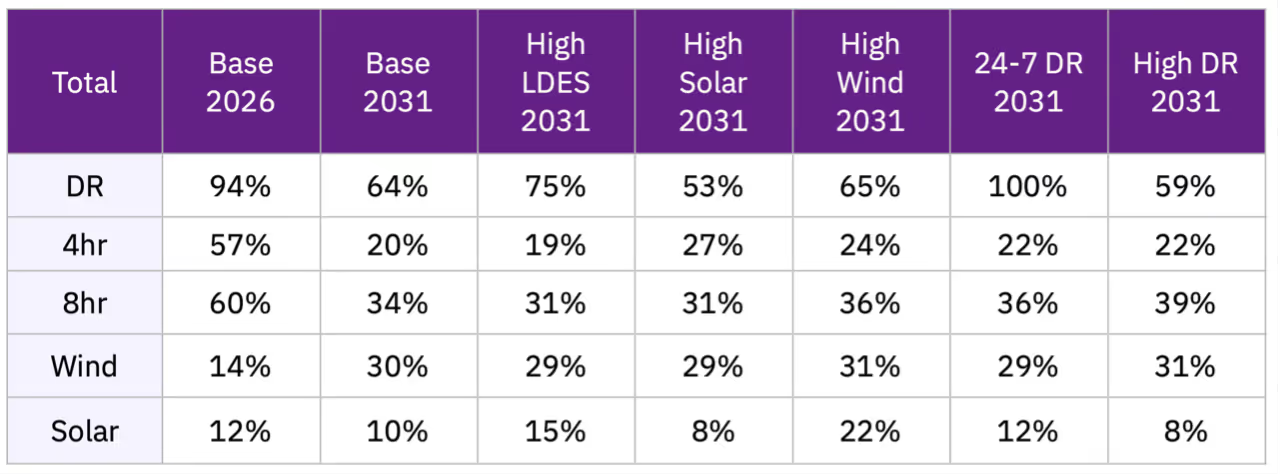
The analysis demonstrated that as renewable resources make up increasingly larger portions of the supply stack, their incremental reliability contribution tends to decrease. For example, Ascend’s modeling showed that the ELCC value of four-hour battery storage falls from 57% to 20% in the 2026 base case, and eight-hour storage experiences a similar (though slightly less precipitous) decline. These dynamics reflect growing resource adequacy risks in PJM during winter months: as periods of system stress extend beyond four hours, longer-duration resources become more valuable for maintaining reliability.
ELCC values for wind and solar in PJM are also significantly impacted by Capacity Interconnection Rights (CIRs), which are interconnection limits that vary by season. Ascend modeling demonstrated that CIRs impact wind and solar ELCC values by at least 5%, and highlighted the need for further analysis regarding the way that CIRs are applied to different types of resources.
Historically, most concerns about peak reliability in PJM occurred during summer heat waves. That dynamic has changed. While solar generation and storage are well-suited to help manage summer peaks, long-duration winter peaks present an increasingly significant problem in terms of accreditation for those resources that might otherwise be well suited to provide prolonged reliability coverage. Storage accreditation declines as storage penetration grows, and marginal ELCC accreditation accelerates the decline. Amplified forced outage and fuel disruption risks during cold weather also pose a problem for thermal accreditation, especially gas.
In both PJM and Ascend simulations, winter posed the greatest system risk. As shown in Figure 4 and Figure 5, Ascend modeling indicates that nearly 90% of LOLE risk may occur during winter by 2031, compared with 13% in 2031 for summer. This shift has significant implications for capacity accreditation, because it favors resources capable of delivering energy during long winter nights and early morning hours.
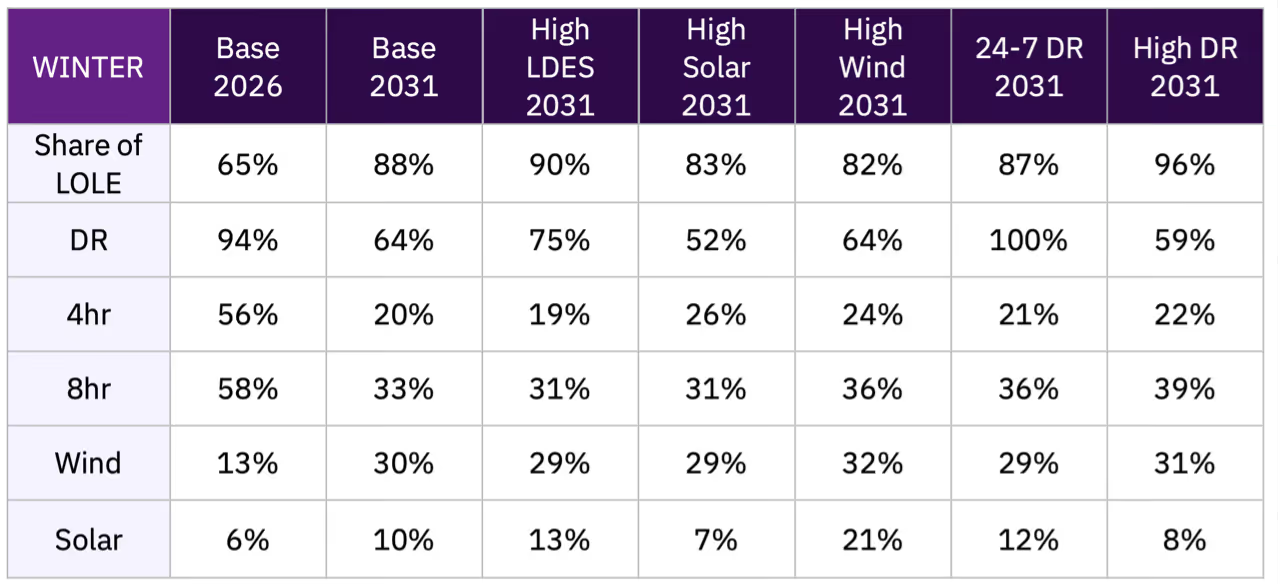
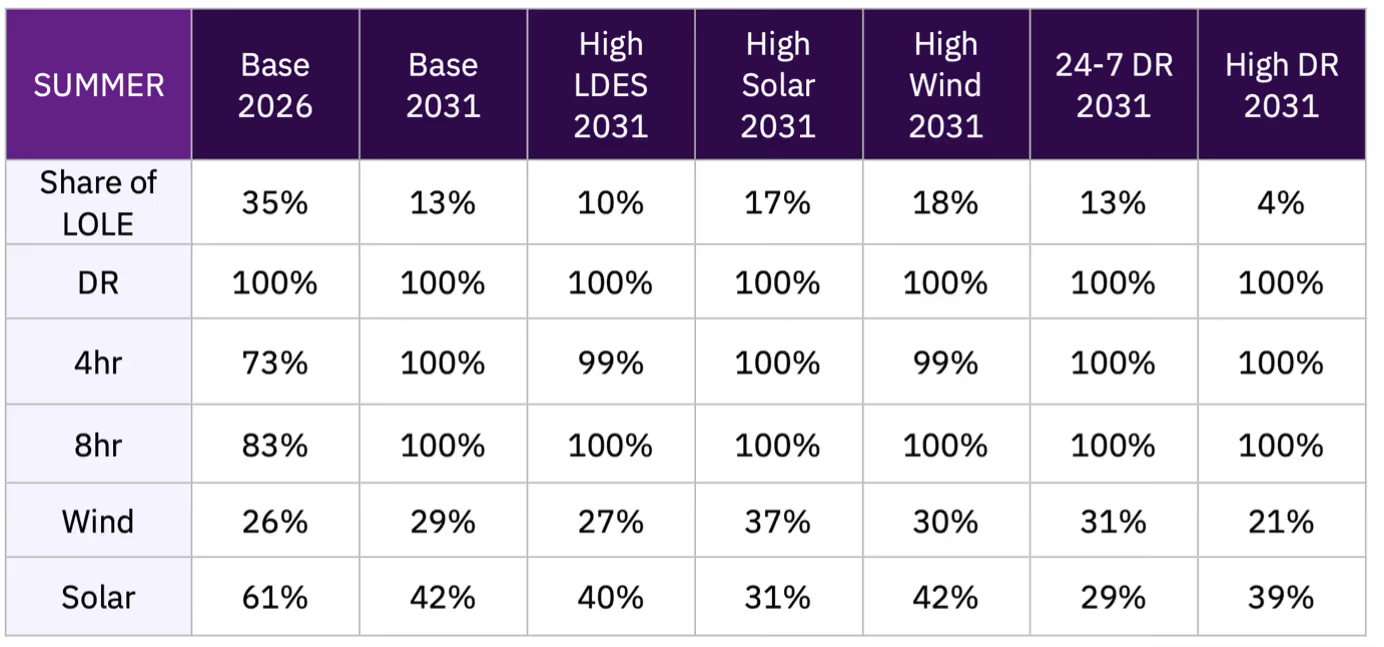
While many ELCC values decline as the system evolves, Ascend's analysis also revealed important connections between asset types. For example, storage can significantly enhance the reliability contribution of solar generation by shifting energy from mid-day production periods to evening hours when system risk is highest. As a result, higher levels of storage deployment tend to increase the ELCC value of solar resources.
In scenarios with substantial storage growth, solar ELCC values rise relative to other cases because the additional storage capacity helps align solar generation with periods of system stress. This finding underscores the importance of evaluating generation technologies as part of an integrated portfolio rather than in isolation.
By replicating PJM’s ELCC framework and developing a forward-looking modeling platform, Ascend provided Advanced Energy United and its stakeholders with a deeper understanding of the forces shaping PJM’s capacity market. While future ELCC values will ultimately depend on PJM's evolving generation mix, Ascend's analysis validated key aspects of PJM's accreditation methodology, quantified potential changes in resource capacity values during the next five years, and identified how generation mix contributes to uncertainties about future ELCC values.
These insights help developers and investors evaluate project economics under evolving market rules, while also providing policymakers with a clearer view of how accreditation methodologies influence resource investment decisions.
PowerSIMM™ is Ascend’s energy analytics solution for resource planning, valuation, and portfolio management. The PowerSIMM software suite incorporates variability in physical and market conditions, ensuring that decisions weight and properly value future events. Utilities, public power entities, renewable developers, and community choice aggregators utilize PowerSIMM for optimal energy portfolio management, resource planning, and project optimization.
To help provide clarity to developers, investors, and policymakers navigating PJM’s rapidly evolving capacity market, Advanced Energy United, an industry association representing companies across the power sector, engaged Ascend Analytics to conduct an independent analysis of Effective Load Carrying Capability (ELCC) outcomes in the PJM energy market. Project goals included the following:
During much of the past two decades, PJM experienced oversupply conditions, declining load, and low rates for electricity consumers. However, significant recent changes to market dynamics – including increased electrification, massive projections of data center-driven load growth, the prospect of thermal retirements, and skyrocketing capacity prices – have triggered serious concerns among key PJM stakeholders about resource adequacy, affordability, and the ability to incentivize much-needed new entry.
One of the most significant reforms undertaken in response to these dynamics has involved the methodology PJM uses to calculate Effective Load Carrying Capability (ELCC), which is used to estimate the reliability contribution of different energy generation assets, and which also acts as the capacity accreditation for generation resources. In 2023, PJM shifted from using average ELCC values to marginal ELCC values, in which the accredited capacity of a resource reflects the reliability value of the next incremental unit added to the system rather than the average value across all resources of that type.
This change has significant implications for project developers and investors. As additional renewable and storage resources enter the system, their incremental reliability value – and therefore their capacity market revenue potential – can decline. Because capacity payments are a key component of project economics in PJM, even modest changes to ELCC values can materially affect investment decisions. For energy market stakeholders who want to evaluate future capacity revenues using independent modeling approaches, it is vital to understand how closely those models align with PJM ELCC calculations.
Understanding the impacts of a shift to marginal ELCC accreditation is also important for other key PJM stakeholders, especially those who are charged with designing a capacity market that properly incentivizes the development of new generation in a way that is economically feasible.
To conduct the analysis of PJM's ELCC modeling framework, Ascend leveraged PowerSIMM™, a proprietary software suite used by power market stakeholders to model energy system reliability, resource adequacy, and ELCC outcomes under a wide range of conditions. Using PowerSIMM, Ascend created a model of the PJM system that could estimate the reliability contribution of multiple resource classes, including wind, solar, storage, demand response, and thermal generation.
As a first step, Ascend sought to replicate PJM’s baseline ELCC calculations for the 2026–2027 Base Residual Auction (BRA). This analysis used a resource adequacy model to simulate how the power system performs across thousands of possible future scenarios.
Ascend incorporated key features of PJM’s methodology into this analysis, though there were differences in the modeling approaches. For example, PJM simulations resample historical weather data directly, simulating future conditions within the constraints of past maximum and minimum temperature values. However, PowerSIMM creates new simulations of future weather that are consistent with historical trends but which are not bound by past constraints. This approach allows Ascend to explore a broader range of possible future conditions while maintaining realistic correlations between weather and electricity demand.
Ultimately, Ascend’s model produced results that broadly aligned with PJM’s official calculations. As seen in Figure 1, comparisons of core reliability metrics – including Loss of Load Expectation (LOLE), which measures the probability that electricity demand will exceed available supply, Loss of Load Hours (LOLH), and Expected Unserved Energy (EUE) – showed strong alignment between the two frameworks, confirming that PowerSIMM could accurately replicate PJM’s reliability dynamics.
After validating the baseline model, Ascend modeled ELCC values for major resource classes in 2026–2027. The results largely matched PJM’s published values for most technologies, with Ascend's modeling showing lower ELCC values for wind and higher ELCC for demand response.
Ascend also explored seasonal variations in reliability contributions. Because system risk has increasingly shifted toward winter conditions, wind resources – which tend to produce more electricity during winter months – demonstrate higher annual ELCC values than solar resources, despite solar’s strong performance during summer peak demand periods. This seasonal analysis highlighted an important dynamic in PJM, in which wind and solar resources can provide complementary reliability benefits across seasons.
With a validated model in place, Ascend then examined how ELCC values may change through 2031 as PJM’s supply profile continues to evolve. Using data published by PJM, Ascend created a similar generation mix that accounted for the supply mix used in the 26/27 BRA, and that incorporated projected growth across several asset classes, as seen in Figure 2. For the 2031 supply mix, both solar and wind increase by a factor of around five, and storage increases by a factor of 14. On the thermal side, gas increases by 30% while coal capacity declines by 25%.
Using these projections, Ascend simulated the PJM system under multiple scenarios to evaluate how changes in the generation portfolio would affect reliability dynamics and capacity accreditation.
One of the most significant findings from Ascend's analysis was that ELCC values for several technologies are likely to decline over the next five years, as seen in Figure 3.
The analysis demonstrated that as renewable resources make up increasingly larger portions of the supply stack, their incremental reliability contribution tends to decrease. For example, Ascend’s modeling showed that the ELCC value of four-hour battery storage falls from 57% to 20% in the 2026 base case, and eight-hour storage experiences a similar (though slightly less precipitous) decline. These dynamics reflect growing resource adequacy risks in PJM during winter months: as periods of system stress extend beyond four hours, longer-duration resources become more valuable for maintaining reliability.
ELCC values for wind and solar in PJM are also significantly impacted by Capacity Interconnection Rights (CIRs), which are interconnection limits that vary by season. Ascend modeling demonstrated that CIRs impact wind and solar ELCC values by at least 5%, and highlighted the need for further analysis regarding the way that CIRs are applied to different types of resources.
Historically, most concerns about peak reliability in PJM occurred during summer heat waves. That dynamic has changed. While solar generation and storage are well-suited to help manage summer peaks, long-duration winter peaks present an increasingly significant problem in terms of accreditation for those resources that might otherwise be well suited to provide prolonged reliability coverage. Storage accreditation declines as storage penetration grows, and marginal ELCC accreditation accelerates the decline. Amplified forced outage and fuel disruption risks during cold weather also pose a problem for thermal accreditation, especially gas.
In both PJM and Ascend simulations, winter posed the greatest system risk. As shown in Figure 4 and Figure 5, Ascend modeling indicates that nearly 90% of LOLE risk may occur during winter by 2031, compared with 13% in 2031 for summer. This shift has significant implications for capacity accreditation, because it favors resources capable of delivering energy during long winter nights and early morning hours.
While many ELCC values decline as the system evolves, Ascend's analysis also revealed important connections between asset types. For example, storage can significantly enhance the reliability contribution of solar generation by shifting energy from mid-day production periods to evening hours when system risk is highest. As a result, higher levels of storage deployment tend to increase the ELCC value of solar resources.
In scenarios with substantial storage growth, solar ELCC values rise relative to other cases because the additional storage capacity helps align solar generation with periods of system stress. This finding underscores the importance of evaluating generation technologies as part of an integrated portfolio rather than in isolation.
By replicating PJM’s ELCC framework and developing a forward-looking modeling platform, Ascend provided Advanced Energy United and its stakeholders with a deeper understanding of the forces shaping PJM’s capacity market. While future ELCC values will ultimately depend on PJM's evolving generation mix, Ascend's analysis validated key aspects of PJM's accreditation methodology, quantified potential changes in resource capacity values during the next five years, and identified how generation mix contributes to uncertainties about future ELCC values.
These insights help developers and investors evaluate project economics under evolving market rules, while also providing policymakers with a clearer view of how accreditation methodologies influence resource investment decisions.
PowerSIMM™ is Ascend’s energy analytics solution for resource planning, valuation, and portfolio management. The PowerSIMM software suite incorporates variability in physical and market conditions, ensuring that decisions weight and properly value future events. Utilities, public power entities, renewable developers, and community choice aggregators utilize PowerSIMM for optimal energy portfolio management, resource planning, and project optimization.
Ascend Analytics is the leading provider of market intelligence and analytics solutions for the power industry.
The company’s offerings enable decision makers in power development and supply procurement to maximize the value of planning, operating, and managing risk for renewable, storage, and other assets. From real-time to 30-year horizons, their forecasts and insights are at the foundation of over $50 billion in project financing assessments.
Ascend provides energy market stakeholders with the clarity and confidence to successfully navigate the rapidly shifting energy landscape.
.avif)

.avif)


.avif)